Modern Cataract Surgery with Premium Lens Options in Kansas City
Modern cataract surgery at Discover Vision removes your eye’s clouded lens and replaces it with an premium intraocular lens that corrects distance, intermediate, and near vision. Unlike a standard lens, a premium lens can reduce or eliminate your need for glasses. Our surgeons perform it at three accredited surgery centers across Kansas City.
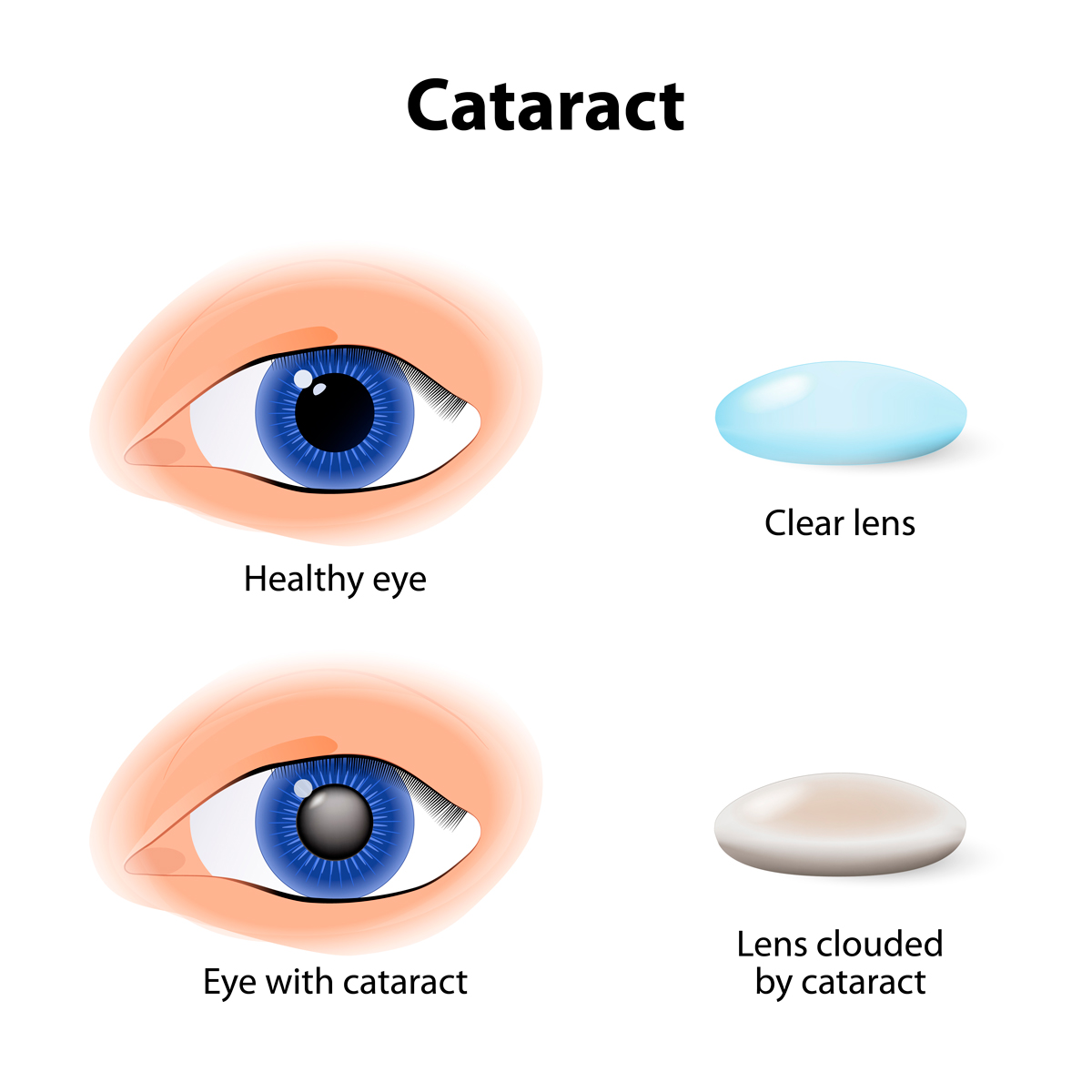
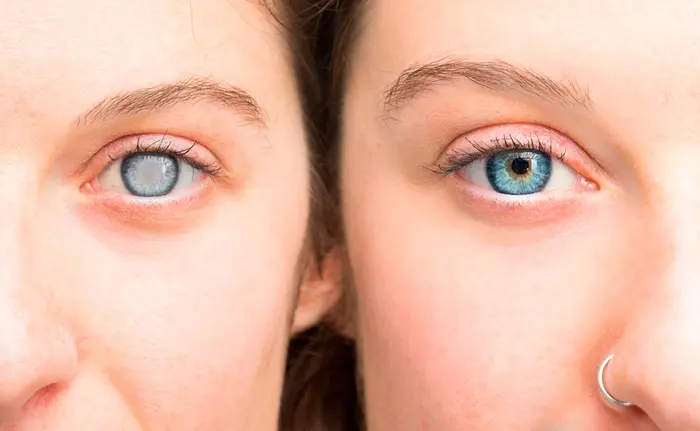
A cataract is the natural clouding of the eye’s lens that comes with age. Vision becomes blurry, colors dull, and glare increases. There is no medication or eye drop that reverses a cataract; the only treatment is to replace the lens surgically, a routine outpatient procedure that takes about fifteen minutes per eye.
What Are The Types Of Cataracts?
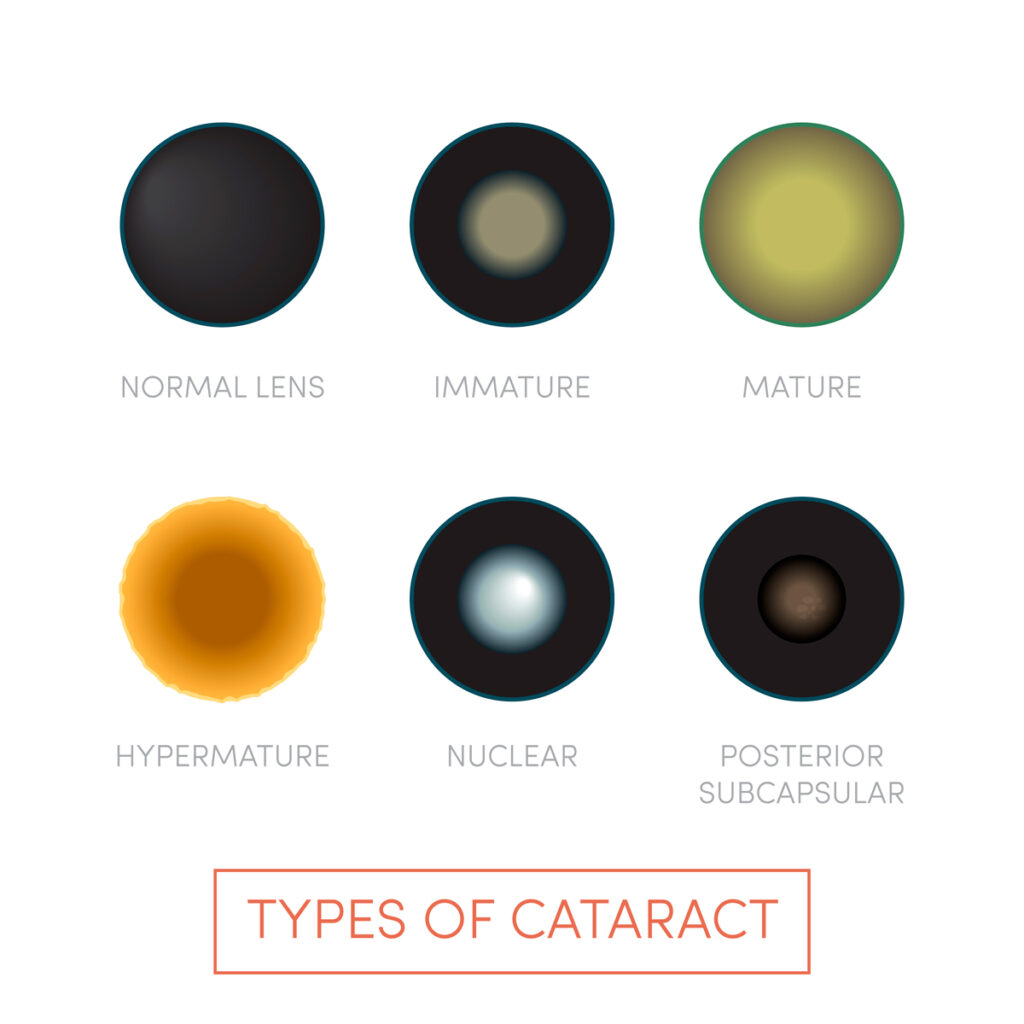
There are several types of cataracts, each affecting different parts of the eye. The most common types include:
1. Nuclear cataracts: These form in the center of the lens and are associated with aging. They cause a gradual yellowing and hardening of the lens.
2. Cortical cataracts: These occur in the lens cortex, the outer edges of the lens. They have a wedge-like appearance and may cause visual disturbances, such as glare or blurred vision.
3. Subcapsular cataracts: These develop at the back of the lens, just beneath the lens capsule. They primarily affect people with diabetes or those taking high doses of steroid medications.
4. Congenital cataracts: These are present at birth or develop during childhood. They may be caused by genetic factors, infections during pregnancy, or other conditions.
5. Traumatic cataracts: These result from an eye injury and can occur immediately or months after the injury.
If you are experiencing vision changes, consult with an eye care professional for an accurate diagnosis and treatment. Discover Vision is accepting new patients and would be happy to see you.
Cataract Symptoms & Signs
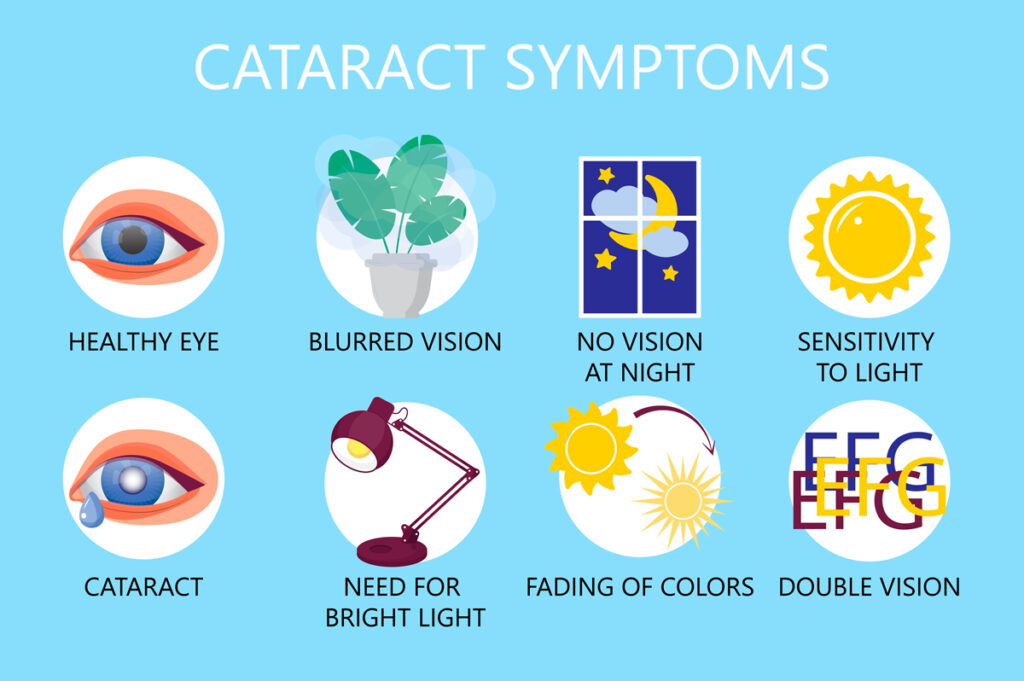
Vision changes can be broadly divided into two categories; refractive changes, which are correctable with a change in eyeglass prescription, and medical changes, which are not correctable with glasses but rather need medical or surgical intervention. One of the most common signs of cataract is experiencing a change in vision that does not improve with a new eyeglass prescription. With normal aging the lens inside the eye gradually becomes thicker and less flexible which drives the need for reading glasses or bifocals after age 40. Those same changes in the lens progress over a period of years and eventually the lens becomes yellow (nuclear sclerosis) or cloudy (cataract). Average age for cataract surgery is around 68-69, but can vary quite a bit depending on a multitude of variables such as heredity, sunlight exposure, lifestyle choices such as diet and exercise, and length of time on certain medications. You may be a candidate for surgery if you experience any of the following symptoms:
Blurry vision not improved with new glasses
Cloudy or foggy vision
Streaks or glare around lights at night
Inability to see in dim light
Feeling like you are looking through a film or smudge
Cataracts represent about 50% of worldwide blindness, and can be corrected with simple removal of the lens which is one of the most common and successful surgeries performed today.
Cataract vision typically manifests through the experience of blurred, foggy or decreased vision. Cataracts are caused primarily through the normal aging process. That means, if you live long enough, you will get them. Risk factors include aging, heredity, sunlight exposure and general health; for example–diabetics tend to develop cataracts earlier than non-diabetics. They can also be the result of long term use of certain medications such as steroids. Cataracts can also be congenital or the result of trauma to the eye. To some degree it may be possible to prevent or delay the need for surgery with good lifestyle choices such as a healthy diet and wearing UV protection sunglasses when spending time outdoors.
Intraocular Lens Implant Options for Cataract Surgery
While there’s essentially one type of cataract surgery, patients have several intraocular lens (IOL) options based on lifestyle and visual needs. All modern cataract surgeries involve placing a lens implant; without it, very thick glasses or contact lenses would be required. These implants are made of durable plastic and are designed to last a lifetime.
Here’s a cleaned-up, reordered, and more concise version of the content per your request, with redundant info removed and grouped under the appropriate headings:
Your Lens Options
Every patient chooses the lens that fits their goals. A standard monofocal lens, covered by Medicare and most insurance, gives clear distance vision with glasses for reading. Premium lenses go further: toric lenses correct astigmatism, multifocal and extended-depth-of-focus lenses provide a full range of vision, and the Light Adjustable Lens can be fine-tuned with light after surgery to reach your target. Our surgical counselors walk you through each option and its cost.
Talk to your surgeon to determine which lens option is best for your vision goals, lifestyle, and ocular health.
Non-Surgical Cataract Treatment
Early symptoms of cataract included changing or decreased distance and / or near vision, blurry or clouded vision, poor night vision, light sensitivity, glare and halo symptoms. Non-cataract surgery options are possible. New eye glasses can help but they are not a curative treatment for cataracts. Antireflective and tint coatings and sunglasses can help one function better as well. Eventually, these changes may not help enough and cataract removal surgery vision correction is recommended as the ultimate cataract treatment.
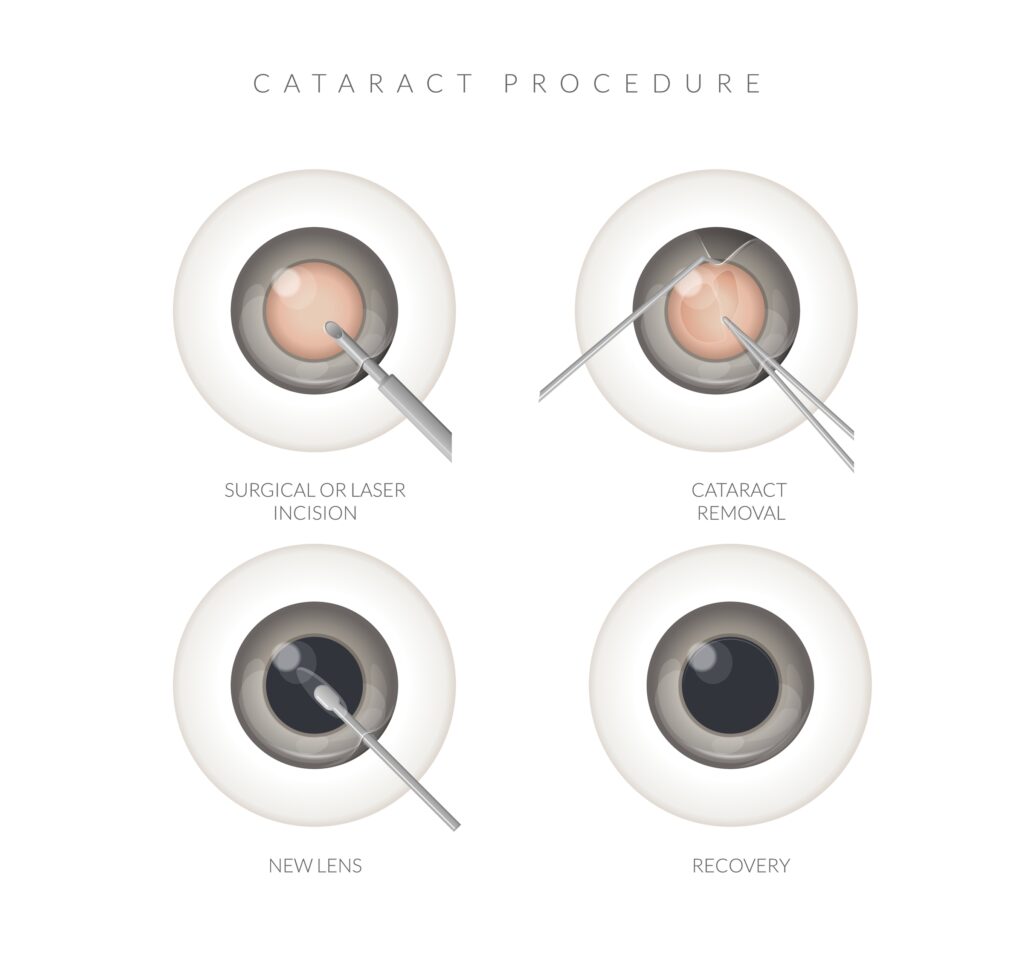
Lasers can be used for part of the modern cataract surgery. A femtosecond laser is used to create the incisions for the surgeon to enter the eye with the phacoemulsification instrument. The femtosecond laser also helps complete the next two steps of the cataract procedure. It helps to open the lens capsule and to soften the crystalline lens for removal.
The first step in your process is cataract specialist doctors to complete ocular examination to confirm cataract is the cause of your vision decrease. When this is determined several diagnostic tests are completed. These include the Zeiss IOL master which measures the length of your eye, the curvature of your cornea, and several other anatomical measurements. Corneal topography will be completed to assess additional aspects relating to astigmatism. Retinal OCT will be completed to assess the health of the central part of your retina called the macula.
The refractive cataract surgeons at Discover Vision Centers utilize several categories of implants. Silicone and acrylic monofocal IOLs are available. Toric / astigmatism implants from Alcon, Bausch and Lomb and Johnson and Johnson vision are used. Two trifocal implants are used ( Alcon Panoptix and Johnson and Johnson Synergy ). Extended depth of focus lenses is also used for patients wanted distance, intermediate, and near vision ( Alcon Vivity and Johnson and Johnson Symfony ). The RxSight Light Adjustable Lens is frequently used for patients that want to minimize or avoid glasses for most if not all activities.
What Causes Cataracts?
Cataracts are a condition when the natural lens inside our eye becomes cloudy or opacified. This natural aging process can occur at any age, but most commonly presents in patients older than 50. As the clarity of the lens changes, overall visual acuity may decline in addition to having more difficulty with glare from incoming light or requiring more light to perform tasks such as reading. There are no preventive measures and the cure is removal with surgery.
Cataract Surgery Recovery
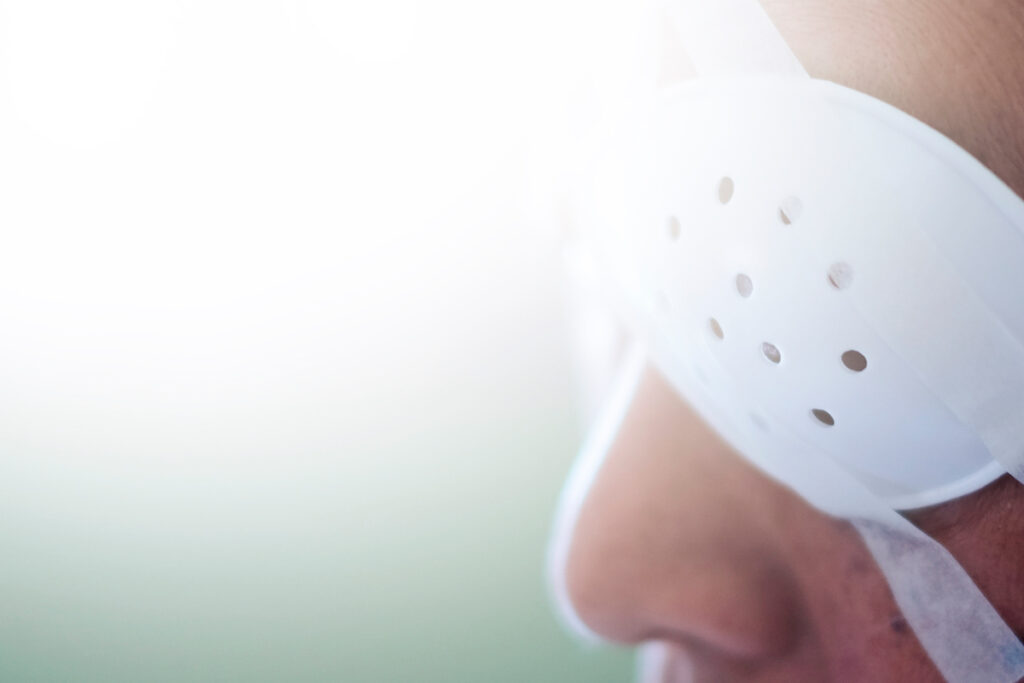
At Discover Vision Centers our Kansas City Eye Surgeons primarily do topical anesthesia but some patients may opt for block anesthesia. With topical anesthesia patients should be able to see and function immediately after surgery is performed. For patients that undergo a block their vision should be functional the following day. The day of surgery all patients should arrange for someone to transport them home. Most patients will be on some form of eye drops after surgery so this should be expected. Most patients can return to work the following day after cataract surgery. Full physical activity can be resumed by one to two weeks for virtually all patients. Most patients it is even sooner. You need to avoid rubbing your eyes and a protective eye shield will be worn over the eye for the first several nights.
We have cared for Kansas City since 1973, own and operate our surgery centers, and our surgeons are among the most experienced in the region with premium lens implants. Most procedures use topical anesthesia, so many patients can see and function the same day. Surgery is performed at our Independence, Leawood, and Northland surgery centers, close to home.
Does Insurance Cover Cataract Eye Surgery?
Does medical insurance and medicare pay for laser cataract surgery? Medical insurance plans including Medicare cover cataract surgery when the condition has reached a level of medical necessity. Insurance and medicare do not pay for the laser assist component of laser cataract surgery. Medical necessity is determined by examination of the eyes by your doctor in addition to visual symptoms you may be experiencing. Your medical insurance will provide coverage for a standard lens implant to replace your clouded natural lens, but most will still require glasses for best vision. If the goal is independence from glasses or contacts after surgery, there are premium implants that your doctor can discuss to achieve this. These lenses are considered cosmetic by medical plans and there will be some out of pocket cost for the “upgraded” lens. HSA and FSA plans can be utilized to help cover these expenses.
At our clinic, we have a highly experienced team of doctors specializing in cataract surgery. If you’re considering cataract surgery, we invite you to schedule a consultation with Dr. Doane or any of the doctors from our expert team. They are more than happy to provide you with a thorough consultation and answer any questions you may have regarding cataract surgery.
Had 2 cataract surgeries just recently. Both went perfect with no problems afterwards at all!
Kathy Carter
Met me ontime, answered all my question about what to expect when I go on Medicare, and discussed the pros/cons of future cataract surgery.
Ken Halford
I have used the services of the Discover Vision Center in Independence, Missouri for many years. I have trusted my eyes to them through a number of eye surgeries including cataracts. Appointments always start on time. They clearly explain what is happening with my eyes. Friendly staff.
Ted Apley
Areas We Serve
Discover Vision Centers proudly serves the Greater Kansas City and surrounding areas. We have 9 locations and 3 surgery centers to serve all of your eye care needs. Our eye clinics are located in Blue Springs, Lee’s Summit, Harrisonville, Independence, The Northland, Raymore, Leawood, and The Legends. Cataract consultations are performed in the office and surgery is performed as an outpatient procedure in our surgery centers in Independence, Leawood or The Northland.
Frequently Asked Questions
Does Medicare cover cataract surgery?
Yes. Medicare and most medical insurance cover cataract surgery and a standard lens once the cataract is medically significant. The upgrade to a premium lens is elective and carries an additional fee, which we review with you in advance.
How much does a premium lens cost?
The premium upgrade varies by lens. Your surgical counselor provides exact pricing at your evaluation, along with financing options.
Is the surgery painful?
Most patients feel only mild pressure. We use topical anesthesia and, when preferred, light sedation.
Am I a candidate?
The best way to know is a cataract evaluation with one of our ophthalmologists. Take our cataract self-test or schedule a consultation to begin.